


 30 / 74

O P E R A N O T E S | L Y R I C O P E R A O F C H I C A G O
30
|
February 17 - March 16, 2018
Both Cynical and Heartfelt: The Enigma of
Così fan tutte
By Martha C. Nussbaum
osì fan tutte
, “Thus Do All Women”
(subtitled “The School for Lovers”),
has now finally entered the Mozart
canon. First performed on January 26, 1790,
at the Burgtheater in Vienna, it was initially
well received, but had only five performances
during Mozart’s lifetime, on account of the
death of the emperor Joseph II only a month
later, and the ensuing mourning period.
(Mozart died on December 5, 1791.) During
the nineteenth and early twentieth centuries
it endured a long eclipse, being considered
offensive and immoral. Sometimes, loving the
music, people attempted to provide it with a
totally different libretto: in one version, the
text was that of Shakespeare’s
Love’s Labours
Lost
in French! By now, however, the opera
in its original form has won its way into the
repertory, and is always in the top twenty of
most-performed operas worldwide, though
ranking slightly below three other Mozart
operas:
The Magic Flute, The Marriage of
Figaro,
and
Don Giovanni.
The beauty of its
music has won the hearts of audiences.
Producers, critics, and audiences,
however, continue to find
Così
a deeply
problematic work. The great critic Joseph
Kerman goes so far as to write, “Even the
most devout Mozartian will have to admit that
there is something unsatisfactory about
Così
”
– which he calls “Mozart’s most problematic
work.” What is the problem? In essence,
it is a felt dissonance between the heartless
spirit of Lorenzo Da Ponte’s libretto and
the remarkable emotional expressivity of
the music, especially in the second act. This
dissonance is then rendered more problematic
still by the neat cookie-cutter ending in which
everything snaps back to the way it was before
Act Two.
Da Ponte’s libretto is polished, well-
constructed, witty, and cynical. Don Alfonso,
the opera’s resident philosopher/observer/
cynic, who creates the plan to test the fidelity
of the young women, opines that emotions
are short-lived and fickle, but the libretto
ultimately goes yet further, suggesting that
they are altogether unreal and factitious. Much
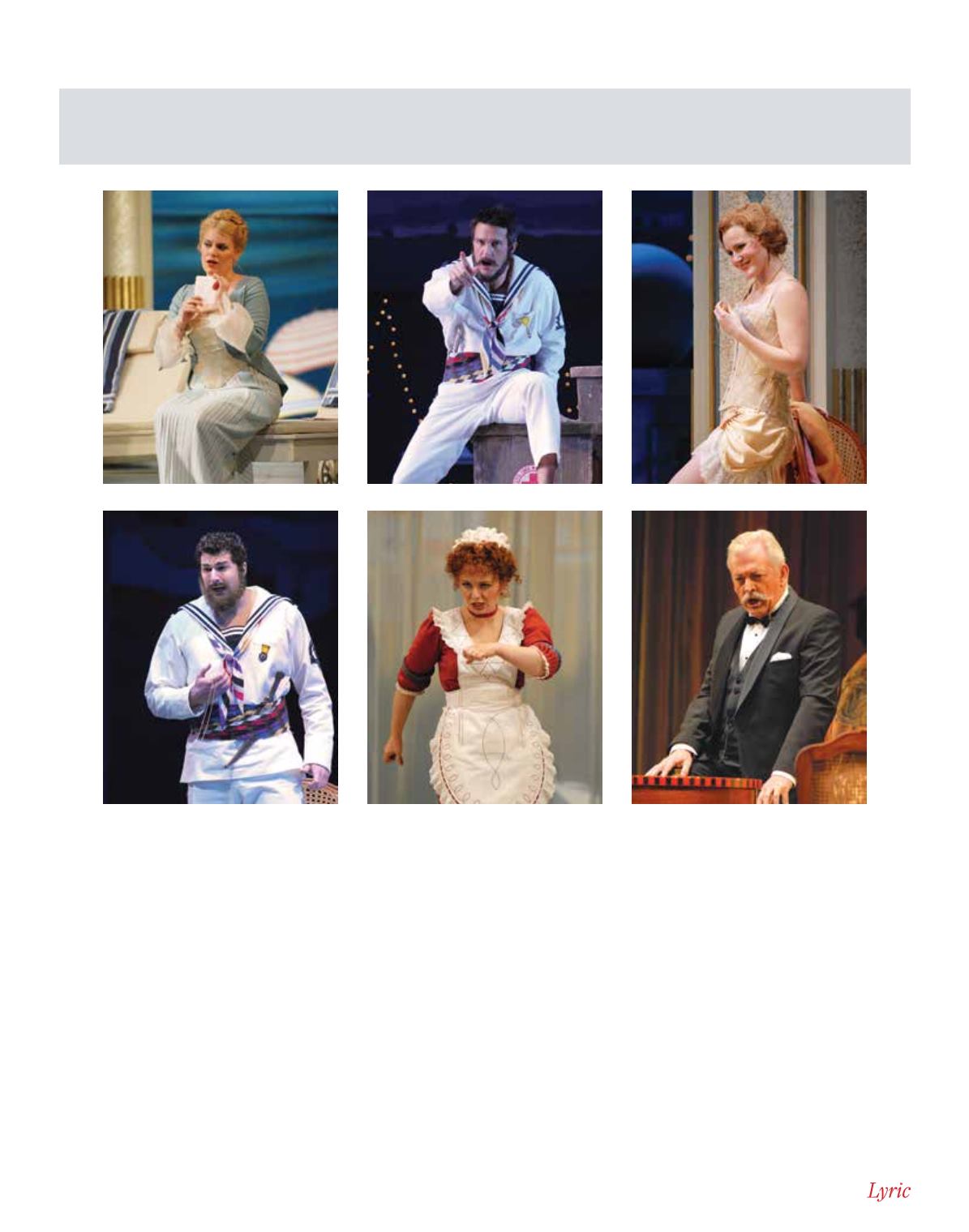
The principals of Lyric’s previous presentation of John Cox’s production, 2006/07 season. Clockwise from top left: Erin Wall (Fiordiligi),
Nathan Gunn (Guglielmo), Lauren McNeese (Dorabella), Sir Thomas Allen (Don Alfonso), Nuccia Focile (Despina), and Eric Cutler (Ferrando).
ALL PHOTOS BY DAN REST
C